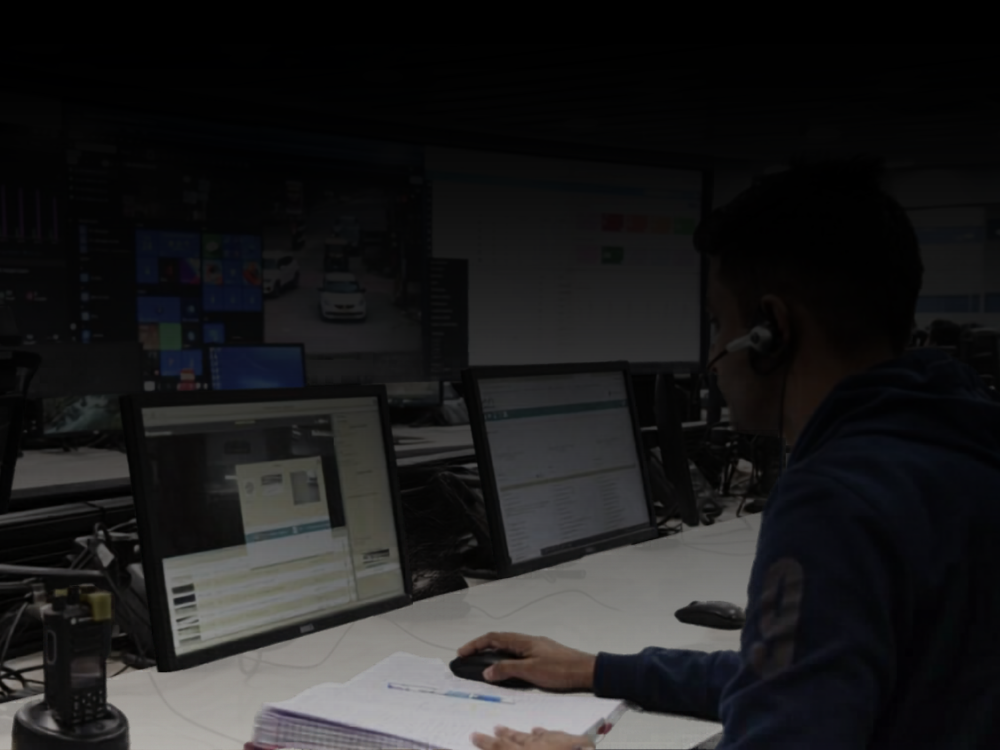
There is a room in Mumbai that never sleeps.
It sits at the heart of the city’s BEST Command and Control Centre — a facility that keeps watch over thousands of buses crisscrossing the metropolis, tracks their movement via GPS in real time, monitors fare collection systems, and ensures passenger safety through integrated dashboards and alerts. On a typical weekday, millions of data points flow through this room every hour.
And at the centre of it all, anchoring the attention of every operator on shift, is a Video Wall.
READ: What is a Video Wall Controller?
Not a patchwork of repurposed screens. Not a collection of desktop monitors. A purpose-built, continuously operational transport command centre video wall — one that turns the city’s transit data into something human operators can actually process, prioritise, and act on.
Here, every bus location update, every fare transaction, every passenger count, and every service disruption is visualised in real time. Operators can:
- Track fleet movement across Mumbai’s sprawling routes with GPS overlays.
- Monitor fare collection and ticketing systems to detect anomalies or revenue leakages.
- Respond to emergencies — from breakdowns to overcrowding — with instant coordination between depots and field staff.
- Analyse service efficiency through dashboards that highlight punctuality, route coverage, and passenger demand.
- Integrate CCTV feeds from buses and depots to strengthen passenger safety and operational oversight.
As India’s urban transport networks modernise — with smart mobility solutions becoming the backbone of sustainable cities — the question of how these centres are built, and what display infrastructure powers them, has never been more relevant.
What an ICCC Actually Does?
— and why the display layer is so critical?
An Integrated Command and Control Centre is the digital nervous system of a modern city. It pulls in data streams from surveillance cameras, IoT sensors, environmental monitors, traffic management systems, utility grids, and emergency dispatch networks, and presents them in a unified operational view. In cities like Vellore and Coimbatore, ICCCs consolidate everything from smart street lighting to water metering into a single command interface.
The promise is immense: faster emergency response, predictive incident management, reduced corruption through transparency, and a quality of urban life that adapts in real time to what the city needs.
But here is the part that often goes undiscussed: none of this works unless operators can see it clearly.
The human brain processes visual information in under 150 milliseconds. An operator scanning a room full of fragmented monitors, toggling between applications, hunting for a single camera feed during a crisis — that operator is operating at perhaps 20% of their potential situational awareness. The display layer is not a nice-to-have. It is the interface between data and human decision-making. Get it wrong, and the most sophisticated ICCC software in the world becomes noise.
A well-designed smart city command centre video wall solves this. It gives operators a unified canvas — one continuous visual surface where every data stream, camera feed, dashboard, and alert has a designated space, visible to everyone in the room simultaneously, controllable in real time.
What the Right Video Wall Infrastructure Looks Like?
Not every large screen arrangement qualifies as a mission-ready command centre display. There is an enormous difference between a consumer-grade multi-display setup and the kind of always-on, zero-downtime video wall that an ICCC demands. Here is what separates them.
- Hardware-native processing. Consumer and mid-market display controllers run on Windows or Linux operating systems. These are general-purpose platforms — they need reboots, they receive patches, they are vulnerable to the same security threats as any PC. In an ICCC that operates 24 hours a day, 365 days a year, a controller that requires a midnight reboot or that crashes during a monsoon flood response is not acceptable. Hardware-native video wall controllers — particularly FPGA-based systems — process signals at the chip level, with no OS vulnerabilities and no software overhead. They boot instantly, they handle signal failures gracefully, and they run without interruption.
- Multi-source integration. A city ICCC does not have one data source. It has dozens — CCTV streams, GIS maps, traffic dashboards, weather overlays, social media feeds for crowd events, SCADA data from utilities. The video wall controller must accept all of these simultaneously, route them to any area of the display, and allow operators to reconfigure layouts on the fly without any loss of signal or display quality.
Explore our AV over IP solutions
- 4K resolution at scale. Cities are deploying higher-resolution cameras than ever. Identifying a licence plate from a busy intersection feed, or spotting a crowd forming in a public space, requires display resolution that can resolve fine detail across a large canvas. 4K-native controllers that support uncompressed video are increasingly the baseline for serious ICCC installations.
- Redundancy as a design principle. When a city is managing a public safety incident, the display system cannot be the failure point. Redundant signal paths, hot-standby controller configurations, and automatic failover are not optional extras — they are the infrastructure standard.
Explore DT4000
India’s ICCC Momentum in 2026
The scale of India’s ICCC buildout is remarkable. Beyond the 100 Smart Cities Mission deployments, the model has spread to private townships, state government emergency operations, defence facilities, and industrial complexes. Wave City launched its command centre in April 2026, monitoring its entire 4,200-acre township from a 16,000 square foot facility. State election commissions used ICCC infrastructure to monitor over 65,000 polling booths during India’s last national election.
The throughput of these centres — the sheer volume of data they are expected to synthesise in real time — is only going to grow. Edge computing is moving intelligence closer to the source, but the display layer in the command centre remains the point where machine-generated intelligence becomes human understanding.
For organisations building or upgrading ICCCs in India today, the display specification is as strategic a decision as the choice of analytics software. A great video wall with a poor controller produces operator confusion. A great controller on an inadequate display produces a bottleneck at the final mile of the data journey. The technology exists to get both right. India’s cities — and the people who depend on them — deserve nothing less.
Smart city command centre video wall FAQs
An ICCC video wall is a large-format multi-screen display system used in Integrated Command and Control Centres to show real-time data from surveillance, traffic, utilities, and emergency services in a unified visual interface for operators.
This varies by city size and function, but most urban ICCCs in India operate video walls ranging from 3×3 (nine screens) to 6×4 configurations, with some major cities using larger setups across multiple rooms.
ICCC-grade video wall controllers need to offer 24/7 continuous operation, hardware-native (ideally FPGA-based) processing, multi-source input management, 4K signal support, and built-in redundancy. Windows-based controllers are generally not recommended for mission-critical environments.ollers are generally not recommended for mission-critical environments.